
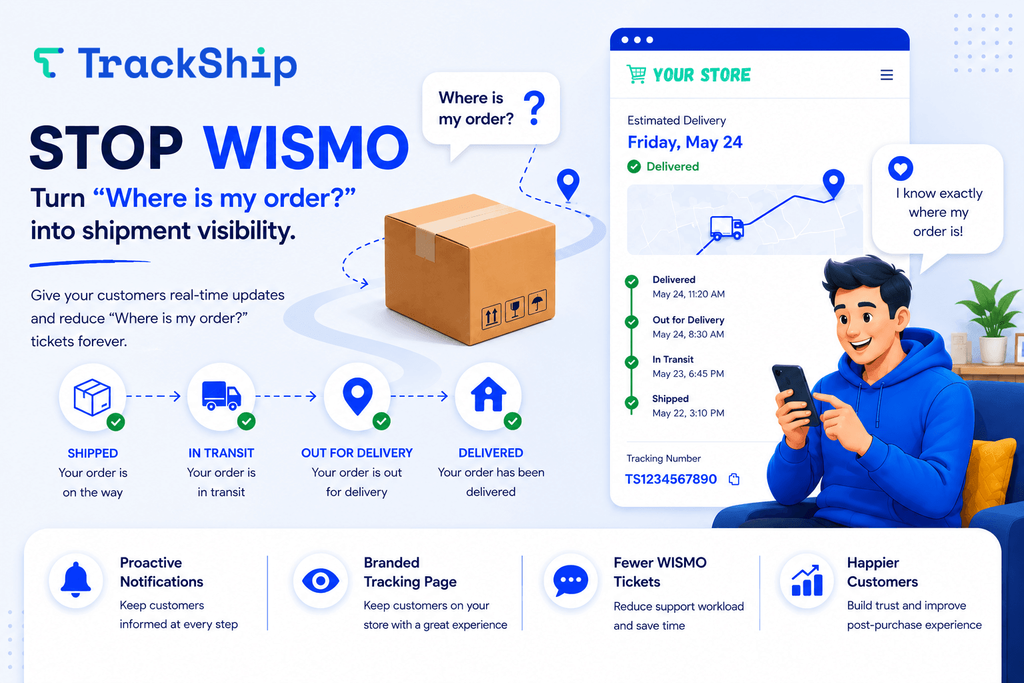
“Where is my order?”
It sounds like a simple customer question. But when your store receives it dozens or hundreds of times every week, it becomes a much bigger problem.
These customer inquiries are commonly known as WISMO, or “Where Is My Order?”
For eCommerce businesses, WISMO requests can increase customer support workload, create uncertainty after checkout, and negatively affect the overall post-purchase experience.
The good news is that many WISMO inquiries can be prevented before customers ever need to contact your support team.
What Does WISMO Mean?
WISMO stands for “Where Is My Order?”
A WISMO inquiry happens when a customer contacts a merchant because they want to know what is happening with their order or shipment.
Customers may ask questions such as:
- Has my order shipped?
- Where is my package right now?
- When will my order arrive?
- Why hasn’t my tracking information updated?
- Is my shipment delayed?
- Was my package delivered?
The underlying issue is usually the same:
The customer doesn’t have enough visibility into their shipment.
When customers can’t easily find the information themselves, they contact the store.
Why Do Customers Send WISMO Requests?
After placing an order, customers naturally want reassurance that everything is moving as expected.
A typical post-purchase journey looks like this:
Order Placed → Order Shipped → In Transit → Out for Delivery → Delivered
But if there is little communication between these stages, uncertainty starts to build.
For example, imagine a customer places an order on Monday.
They receive an order confirmation but hear nothing for the next three days.
By Thursday, they’re wondering:
“Has my order even shipped?”
So they email your support team.
The shipment may actually be moving normally. The customer simply wasn’t informed.
That is a preventable WISMO request.
The Hidden Cost of WISMO
One WISMO ticket isn’t a big deal.
Thousands of them are.
Every unnecessary shipment-status inquiry requires someone on your team to check the order, find the tracking number, review the carrier status, and reply to the customer.
As order volume grows, this repetitive work grows with it.
WISMO can lead to:
Higher support workload
Your team spends time answering repetitive shipping questions instead of handling issues that genuinely require human attention.
Poor customer experience
Customers shouldn’t have to chase a business to understand what’s happening with an order they’ve already paid for.
Lower customer confidence
Limited shipment communication can make customers wonder whether their order is being handled properly.
More pressure during peak periods
During holidays, promotions, and high-volume sales periods, WISMO requests can quickly overwhelm a support team.
How to Reduce WISMO Requests
The most effective way to reduce WISMO is simple:
Give customers shipment information before they ask for it.
Here are some of the most important ways eCommerce stores can do that.
1. Provide a Clear Order Tracking Page
Customers should have one easy place where they can check their shipment progress.
Instead of searching through old emails or visiting unfamiliar carrier websites, they should be able to view their tracking information directly from your store.
A useful tracking experience can show information such as:
- Current shipment status
- Tracking history
- Shipping carrier
- Tracking number
- Latest shipment update
- Delivery progress
This turns shipment tracking into a self-service experience.
2. Send Proactive Shipment Notifications
Don’t make customers repeatedly check their tracking page.
Notify them when something important happens.
For example:
Shipped → In Transit → Out for Delivery → Delivered
These updates reassure customers that their package is moving and keep them informed throughout the delivery journey.
3. Communicate Delivery Exceptions
Not every shipment goes according to plan.
Weather, carrier delays, failed delivery attempts, address problems, and other exceptions can affect delivery.
Silence during these situations creates uncertainty.
If customers know that a shipment has been delayed or requires attention, they are much less likely to repeatedly ask your team for an update.
4. Keep Customers on Your Store
Sending customers directly to a carrier tracking website means handing over an important part of the customer experience.
A branded tracking page allows customers to check their shipment while remaining connected with your store.
It can also create additional opportunities to display relevant products, promotions, customer support information, or other post-purchase content.
How TrackShip Helps WooCommerce Stores Reduce WISMO
TrackShip for WooCommerce helps merchants create a more transparent post-purchase experience by automatically tracking shipments and keeping customers informed as their orders move toward delivery.
Instead of customers asking:
“Where is my order?”
they can check their shipment status themselves.
With automated shipment tracking, a branded tracking experience, and shipment status notifications, WooCommerce stores can provide customers with the information they need throughout the delivery journey.
This can help businesses:
- Reduce repetitive WISMO support requests
- Give customers better shipment visibility
- Automate shipment status communication
- Improve the post-purchase experience
- Keep customers engaged after checkout
- Free support teams to focus on more important customer issues
WISMO Isn’t Just a Support Problem
WISMO is often treated as a customer service issue.
But in reality, it’s usually a post-purchase communication issue.
When customers have to ask where their order is, there’s often a gap between what’s happening with the shipment and what the customer knows about it.
Closing that gap creates a better experience for everyone.
Customers get confidence and visibility.
Support teams receive fewer repetitive questions.
And merchants gain more control over the customer experience after checkout.
Turn “Where Is My Order?” Into “I Know Exactly Where My Order Is.”
Your relationship with a customer doesn’t end when they click Place Order.
The period between purchase and delivery is one of the most important parts of the eCommerce experience.
Give customers clear tracking information, communicate important shipment updates proactively, and make it easy for them to find answers without contacting support.
With the right post-purchase experience, “Where is my order?” can become a question your customers rarely need to ask.
Related Articles
Shipment Tracking for WooCommerce: Complete Guide for Store Owners
For WooCommerce customers, the experience doesn’t end at checkout. Once an order ships, they want…
Read Article →
Elevate Your Shipping Game: Tips for eCommerce Businesses
As an eCommerce business, keeping your promises for shipping to customers is crucial to building…
Read Article →
E-commerce Order Tracking: Why Tracking Orders is a Must
What is order tracking in eCommerce? Order tracking has become a basic expectation in today’s…
Read Article →